Never trade
alone again

Sentiment first, then the chart
Ask most services what they do and you get a signal with the reasoning removed. Jeff starts from the other end of the question: where is money actually moving, and who is positioned on the wrong side of it? Sentiment, in his hands, has almost nothing to do with an oscillator reading overbought. It is the behaviour of the people who already own the thing.
That is the whole method in one paragraph, and it explains why he spends the first half hour of a session establishing what kind of day it is before naming a single ticker. If the selling was forced, the stock is already sold and the scary headline has been paid for. If the buying was euphoric, the move is an exit rather than an entry, however good the chart looks.
He has been doing this long enough to recognise the shape of it. Twenty years of reading tape leaves you with a library of sequences, and he will tell you which one you are standing in — usually with the year attached.
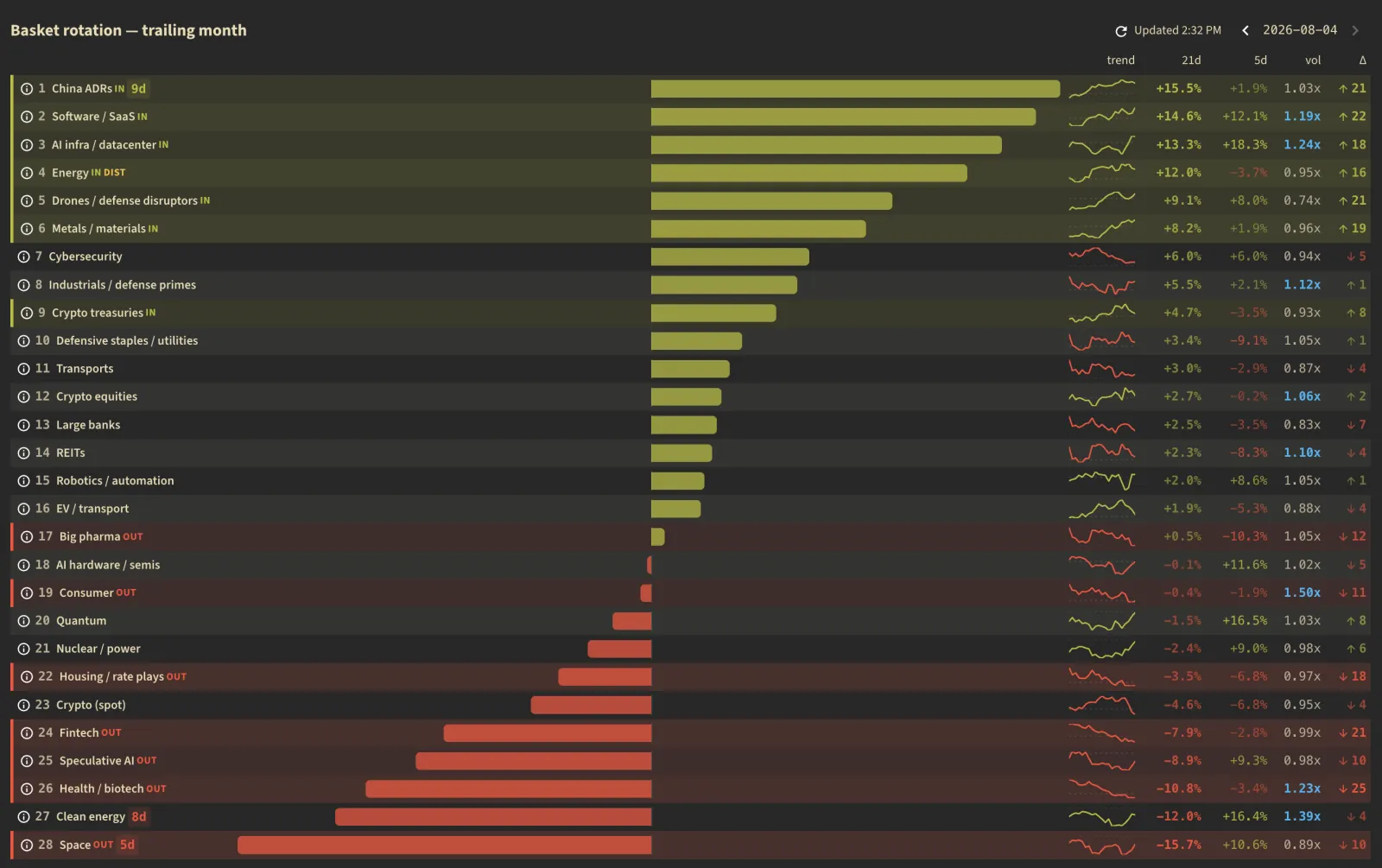
Then the trade, and this is where most people leak money even with a correct read. A rotation that shows up in the quadrant before the rankings reorder is an entry. A theme leading on the month while fading on the week is a trim. The instrument gets matched to the idea rather than to the excitement — a slow quality theme is stock or long-dated calls sized like a hedge, a speculative theme is small premium bought while the theme is still unloved and nobody is talking about it.
Risk comes first in the sequence, not last, and he is blunt about where to look for it. The index is useful for exactly one thing:
Position sizing gets the same treatment. He talks in terms of where institutions actually commit capital rather than in round numbers that sound decisive, and he says out loud when a level is fantasy.
The last part is the one that is hardest to fake, and it is probably why members stay for years. When his own read stops working, he says so in the recap — on the record, dated, in front of everyone who is following him. In July 2026 he opened a session by putting his entire framework on notice:
Ask him a naive question and he answers it, then asks one back until the reasoning belongs to you. Members bring that up more often than they bring up the alerts, which is the difference between copying a trade and learning to find one.
What's included